Fountain Close, the Vennels of South Street

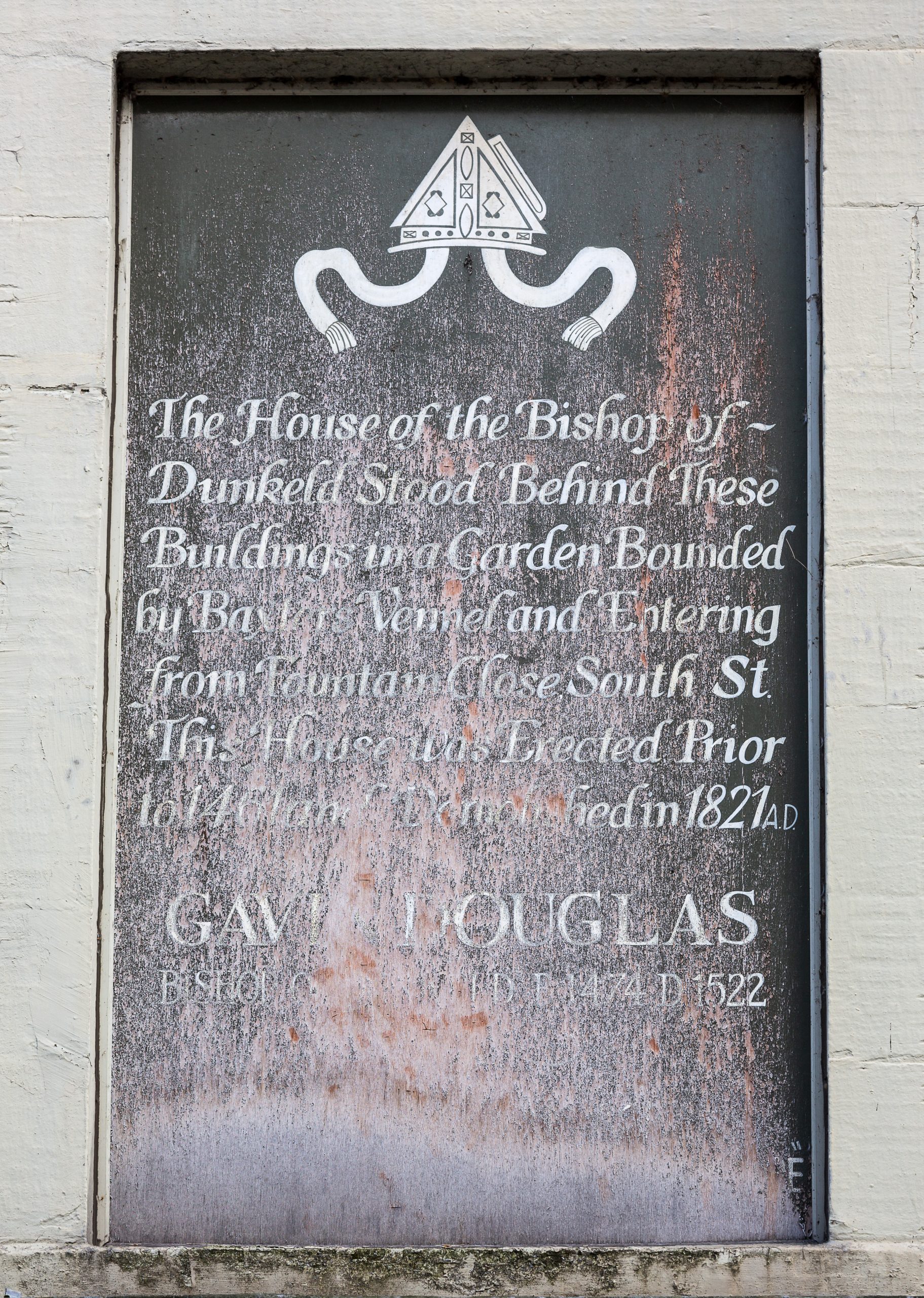
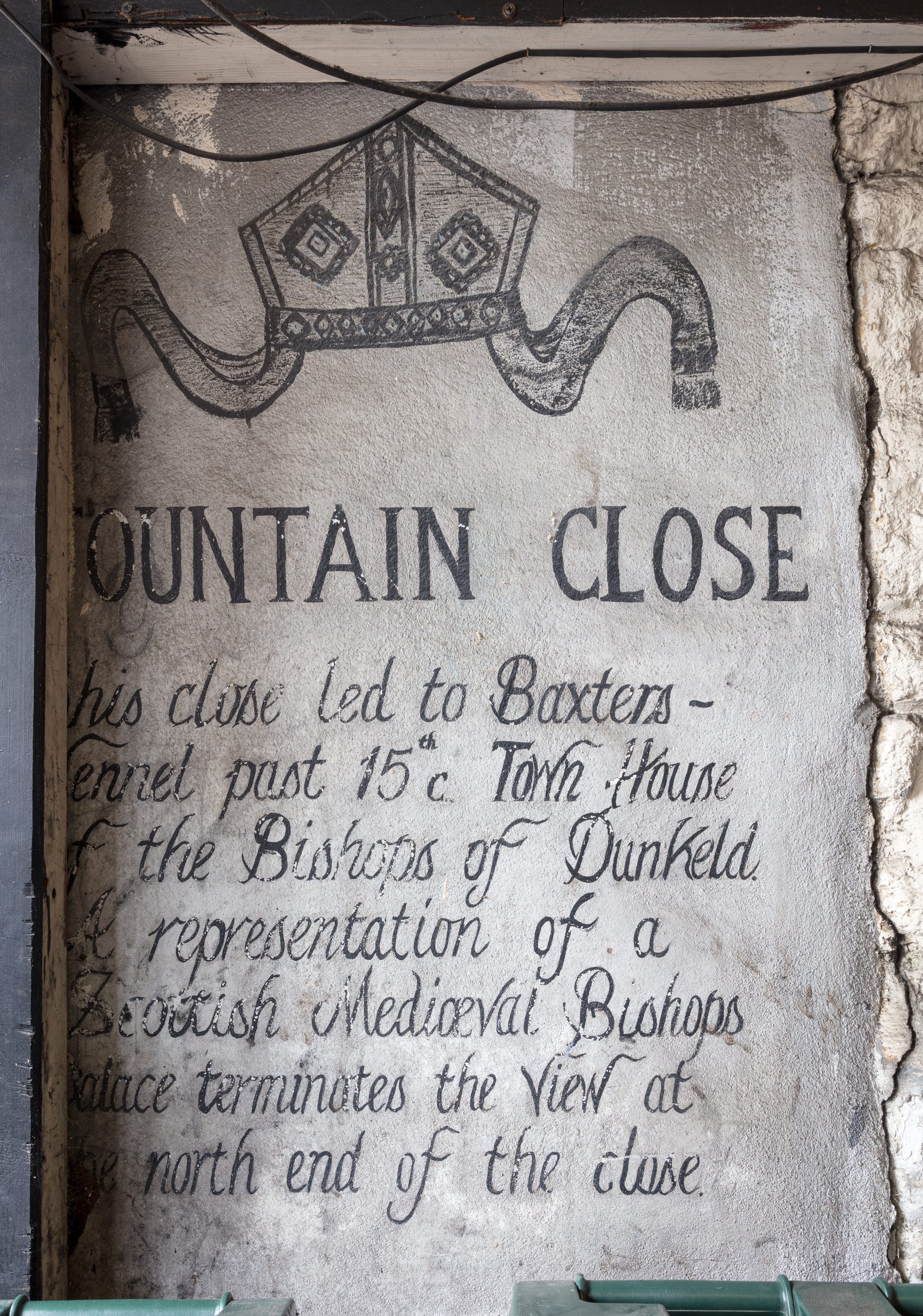
Fountain Close is at 17 South Street on its north side. Until 2022, painted on the whitewashed walls were 14 descriptions of the old vennels of Perth and their relationship to the old Guilds of Perth with emblems of the Guilds. The descriptions were painted directly on to the walls. It is believed the images were painted by pupils of Kinnoull School under the guidance of Miss Rhoda Fothergill. They have now all been whitewashed over as can be seen in the first photo. The remainder of the photographs were taken in 2018 and 2019. Also shown is part of a Celtic cross painted on the end wall. Some of the vennels remain in existence although others are lost. Traces of the Meal Vennel remain as the exit of the shopping centre on to the High Street and the loading bank on the South Street. The close when in use passed by the 15th century Bishop’s House and on into Baxters Vennel. A board on a corner building in St John Street also confirms the existence of the Bishop’s House prior to its demolition in 1821.

0 Comments

Baxters Vennel

There are several vennels in Perth, not all towns have them. The word is derived from the French “venelle” meaning a narrow lane between buildings. Baxters Vennel goes between St John Street and the Watergate, along the side of the former McEwans/Beales building. Walking along St John Street from South Street it is the first opening on the right. The plaque on the south side of the Vennel explains that Baxter was the old Scots name for bakers. There is evidence that the Baxter Incorporation had property in this area including a “Bakers Hall”. The plaque was donated by McEwans of Perth; much of the text describes the origin and development of the store.  In 1868 when Perth had a population of only 25,000 there were 16 draper shops in St. John Street.

0 Comments

King James VI Hospital

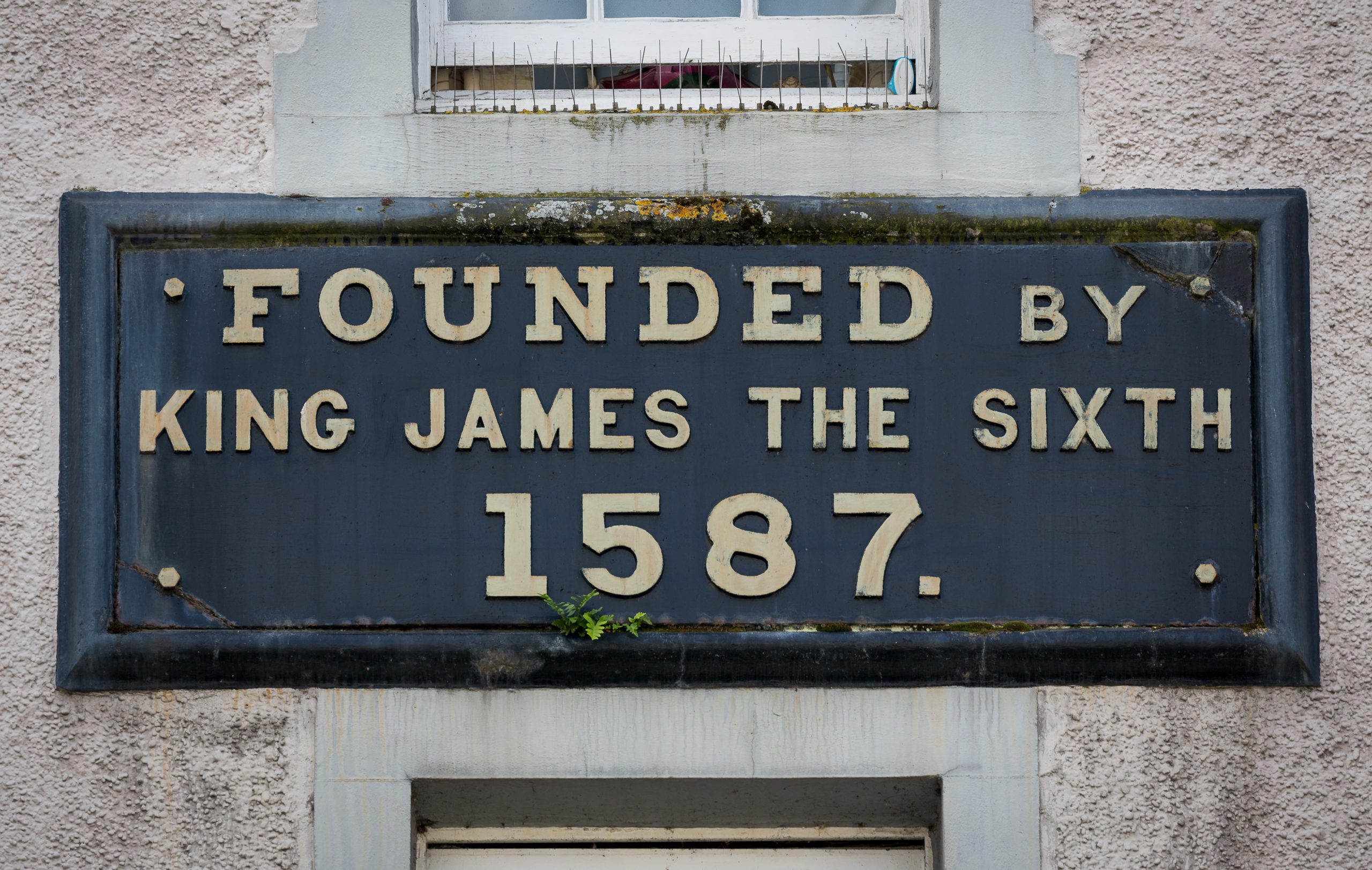
An information board (panel 10 of the PKHT Medieval Trail) explains the history of the Hospital. A Hospital at that time could be described as an early form of Poor House. It was built on the site of a Carthusian Monastery A royal charter in 1569 during the regency of the Earl of Moray established a hospital in Perth. The 1587 date on the building refers to a second royal charter by King James VI when he become old enough to rule, although buildings were not erected until 1596. The original buildings were not on the present site but close to the Perth Bridge. They were demolished by Cromwell’s engineers to provide material for the building of his citadel on the South Inch. (Gazetteer for Scotland, 2020) The building we see to-day was built on this new site in 1749-1750 and renovated in 1976 to form a series of flats. The flats are administered by the Hospital Manager overseen by the ministers and elders of St. John’s Kirk and Letham St. Mark’s church, maintaining a religious connection. There are further informative plaques within the property which is occasionally open on Doors Open Days. A full history of the site is on the…

0 Comments

City Mills in West Mill Street

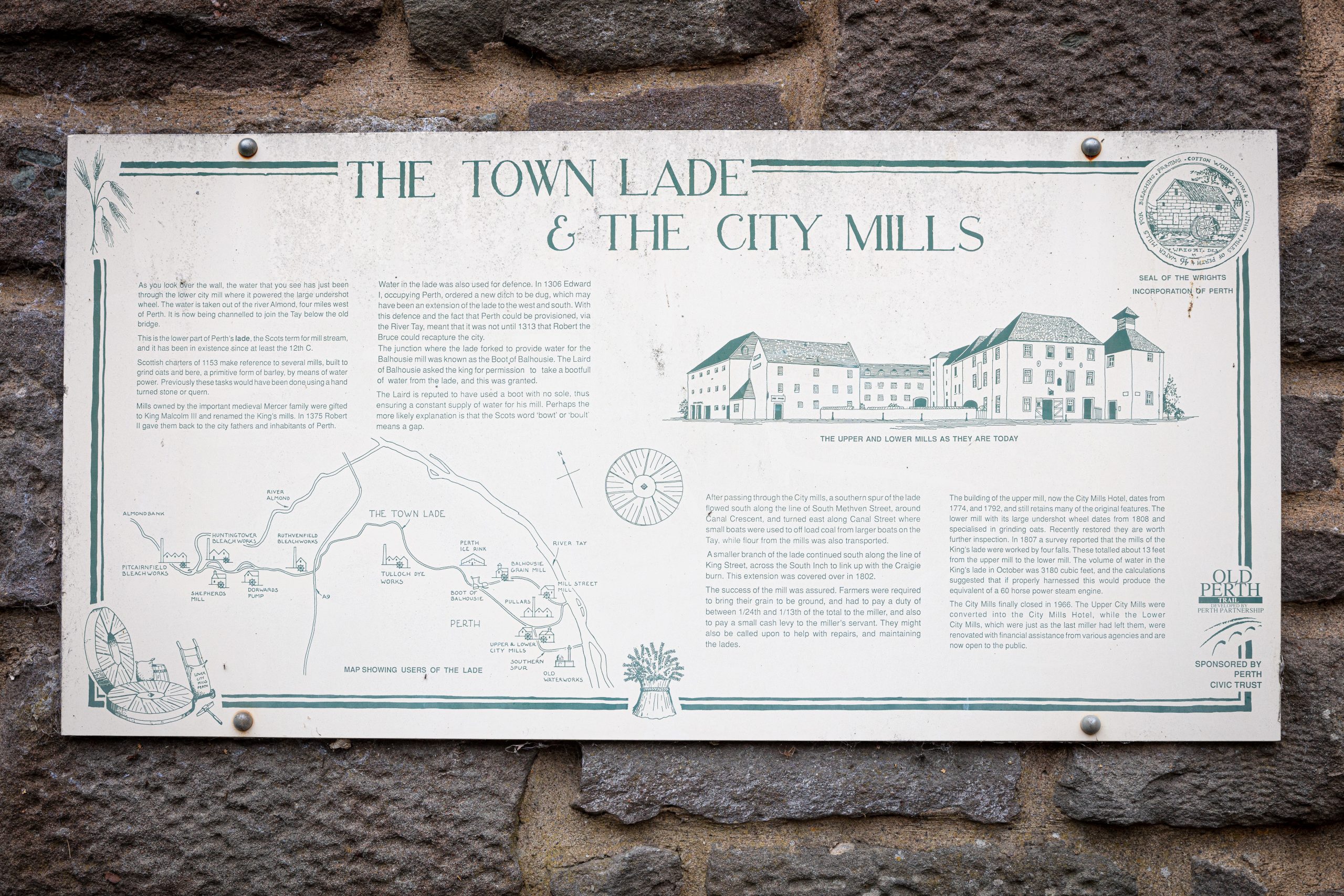
A modern information board on the east side of the City Mills near the Lade gives full details of the importance of the Lade and the City Mills. (This information board was sponsored by the Perth Civic Trust.) There were almost certainly mills on this site in the 12th century. Commercial activity continued until 1966. Until fairly recent times the importance of the Lade was confirmed by the annual inspection carried out by members of the Town Council. The buildings were restored by Perth and Kinross Council between 1982 and 1988 and became a working mill again for some years. There is a plaque inside the Mill commemorating this. Later it housed Perth Tourist Information Centre. The buildings are now used by Perth and Kinross Heritage Trust and are occasionally open on Doors Open Days. Plans to open up as a working mill and visitor attraction were sadly abandoned in 2023.

0 Comments

Mercat Cross in New Scone

This cross in Cross Street, New Scone is a replica of the Old Scone Mercat Cross, still to be found in its original position in the grounds of Scone Palace. It was erected in 1903.

0 Comments

St Paul’s Church

A modern information board entitled Going to Market (Panel 9 of the Perth Medieval Trail) can be found beside the newly redeveloped St Paul’s Church open-air space. This replaced an earlier information board describing the history of St Paul’s Church and surrounding area (also shown). St. Paul’s was the first church to be built outside the area of the old city walls. The population of Perth 1801 was 16,388 a rise of 7.00 in the previous 56 years. Perth City Council agreed an additional church was required. The current site was chosen in preference to one by the shore despite the site lying directly over a branch of the city lade. Planning began in June 1796 and the first service of induction was held in November 1807. (History of St Paul’s Church, J. R, Maclean 1957).

0 Comments

Glasite Meeting House at St Paul’s

On the other side of the High Street from St Paul's Church stands a building which used to be the Glasite Meeting House. John Glas founded the Glasites in Scotland in 1730.  A Glasite Church which was regarded as the “foundation of the Glasites” may have been founded in 1733. This church building was later, thought to have been erected in Perth in 1773. The date of 1839 it is thought refers to a later renovation, not to the building’s actual construction. (History of St Paul’s Church, J. R, Maclean 1957) The Glasite churches aimed at a strict conformity with a primitive type of Christianity. Church unanimity was considered to be necessary; if any member differed in opinion from the rest, he must either surrender his judgement to that of the church, or be shut out from its communion. The Lord’s Supper was observed weekly and every member was required to be present. This did not take the form of symbolic morsels of wine and bread but a relatively substantial meal, a custom leading to the Glasites’ nickname of ‘Kail Kirk’ as Scotch Broth was served. The custom may have arisen as a charitable response to the poverty of most members of this…

3 Comments

St Paul’s Hospital

A  simple plaque showing the approximate site of the hospital and a founded date as March 1650 A History of St Paul’s church gives the date of founding of this establishment by John Spens as 1434. The site at the corner of the Newrow had previously been occupied by a nunnery one of whose chapels was dedicated to St. Paul. It is stated in this History of St Pauls that the chapel was of a considerable size allowing it to provide a hospital for travellers, the infirmed and the poor. (History of St Paul’s Church, J. R, Maclean 1957)

0 Comments

Bishop of Dunkeld’s House, St John Street

A painted wooden board high up at the southern end of St John Street describes the position of the Bishop’s House. The house was erected in 1414-1416 and demolished in 1821. The board is in poor repair and becoming illegible. This board should be read in conjunction with Fountain Close.

0 Comments
Close Menu