Former Hospital Lodge in York Place

This B-listed building on York Place, originally the lodge for the 1836 Perth County and City Infirmary was built in 1840 to a design by William Donald Mackenzie, a Perth City Architect, who was responsible for a number of impressive public and domestic buildings within the city. The Infirmary is now the A K Bell Library. The Lodge was was built in a neo-classical style to harmonise with the main hospital building. It was moved and rebuilt on its present site on York Place in 1867. After being derelict for many years it was purchased and restored by the Perth and Kinross Heritage Trust work for which PKHT was given a Civic Trust Award in 2003, for an outstanding improvement to the built heritage of Perth. The lodge served as the offices of PKHT until 2019 when they moved to the City Mills. It now houses the Rejuvenate Clinic.
0 Comments

King James VI Hospital

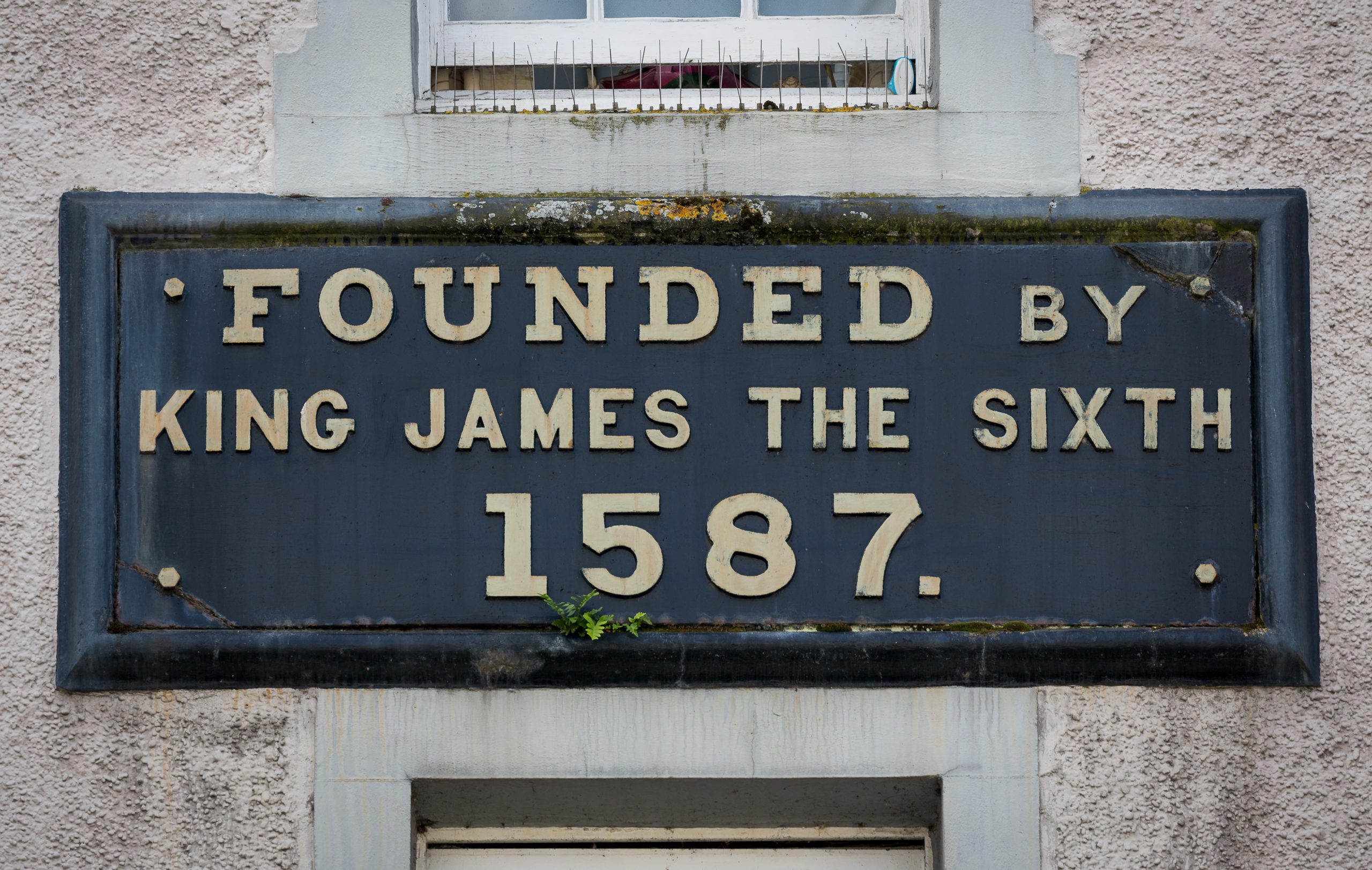
An information board (panel 10 of the PKHT Medieval Trail) explains the history of the Hospital. A Hospital at that time could be described as an early form of Poor House. It was built on the site of a Carthusian Monastery A royal charter in 1569 during the regency of the Earl of Moray established a hospital in Perth. The 1587 date on the building refers to a second royal charter by King James VI when he become old enough to rule, although buildings were not erected until 1596. The original buildings were not on the present site but close to the Perth Bridge. They were demolished by Cromwell’s engineers to provide material for the building of his citadel on the South Inch. (Gazetteer for Scotland, 2020) The building we see to-day was built on this new site in 1749-1750 and renovated in 1976 to form a series of flats. The flats are administered by the Hospital Manager overseen by the ministers and elders of St. John’s Kirk and Letham St. Mark’s church, maintaining a religious connection. There are further informative plaques within the property which is occasionally open on Doors Open Days. A full history of the site is on the…

0 Comments

St Paul’s Hospital

A  simple plaque showing the approximate site of the hospital and a founded date as March 1650 A History of St Paul’s church gives the date of founding of this establishment by John Spens as 1434. The site at the corner of the Newrow had previously been occupied by a nunnery one of whose chapels was dedicated to St. Paul. It is stated in this History of St Pauls that the chapel was of a considerable size allowing it to provide a hospital for travellers, the infirmed and the poor. (History of St Paul’s Church, J. R, Maclean 1957)

0 Comments

Carthusian Monastery

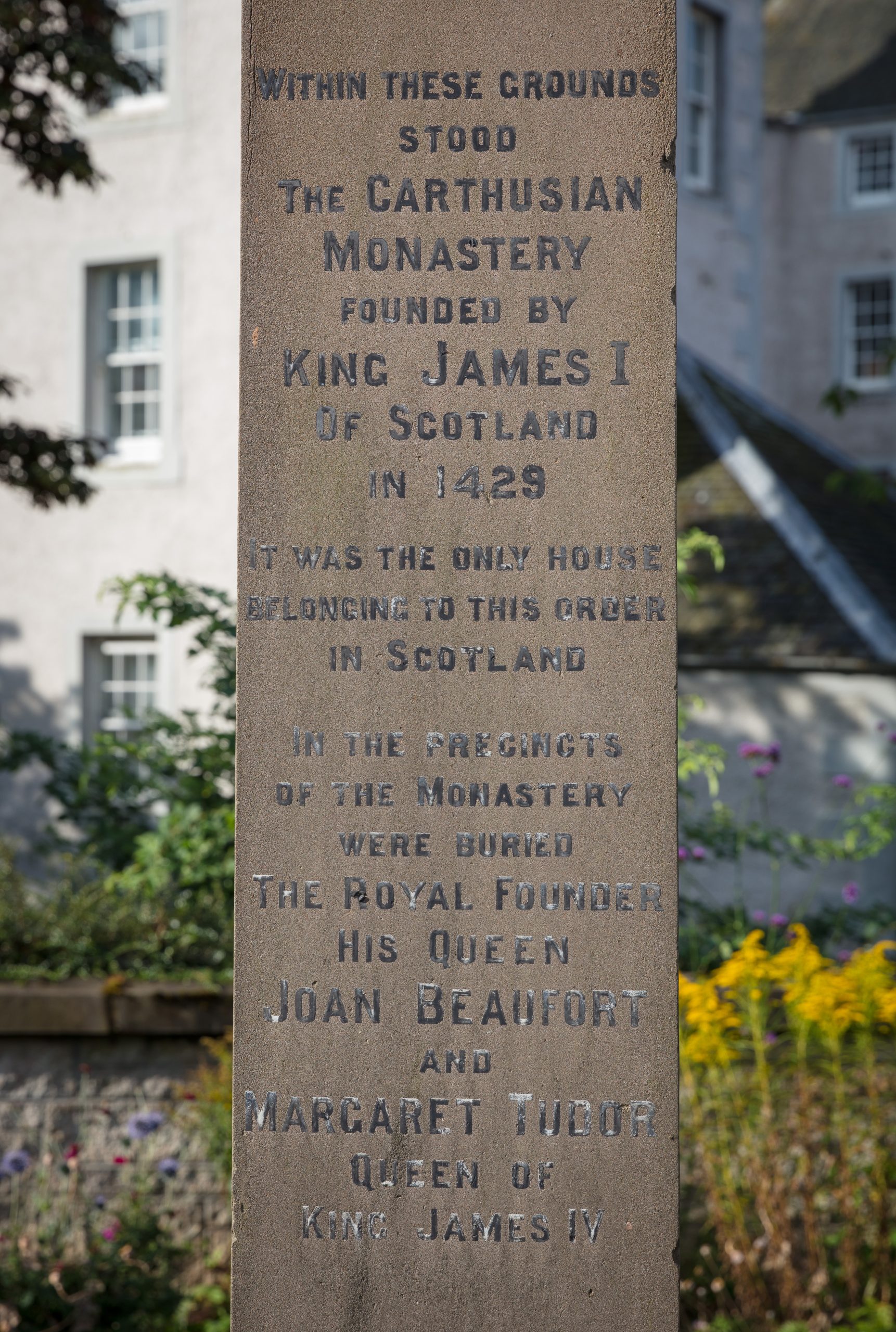
Occupying extensive lands south of Hospital Street and west of King Street, the Carthusian Priory in Perth was the only one in Scotland, was founded in 1429 by James I (1406–1437). The  foundation of a Carthusian or Charterhouse Monastery is recorded on the obelisk in the rounds, on the corner of King Street and Hospital Street. Further details are on the information board 'The Vale of Virtue' on Hospital Street, panel 10 of the PKHT Medieval Trail. The Carthusian Order  is an enclosed order of both monks and nuns. The Carthusians are the most ascetic and austere of all the European monastic orders being regarded as the pinnacle of religious devotion to which monks from other orders were attracted when they felt in need for greater spiritual challenges. The name Carthusian is derived from the Chartreuse Mountains in the French Alps. The name was adapted to the English “Charterhouse”. Charterhouse Lane is nearby.    It is said James I was buried within the grounds of the monastery following his murder at Blackfriars. Also buried in the monastery grounds are Joan Beaufort Queen of James I and Margaret Tutor, sister  of Henry VIII and Queen of James IV. In 1750 the King James VI Hospital was built on…

1 Comment

Wright Incorporation in Watergate

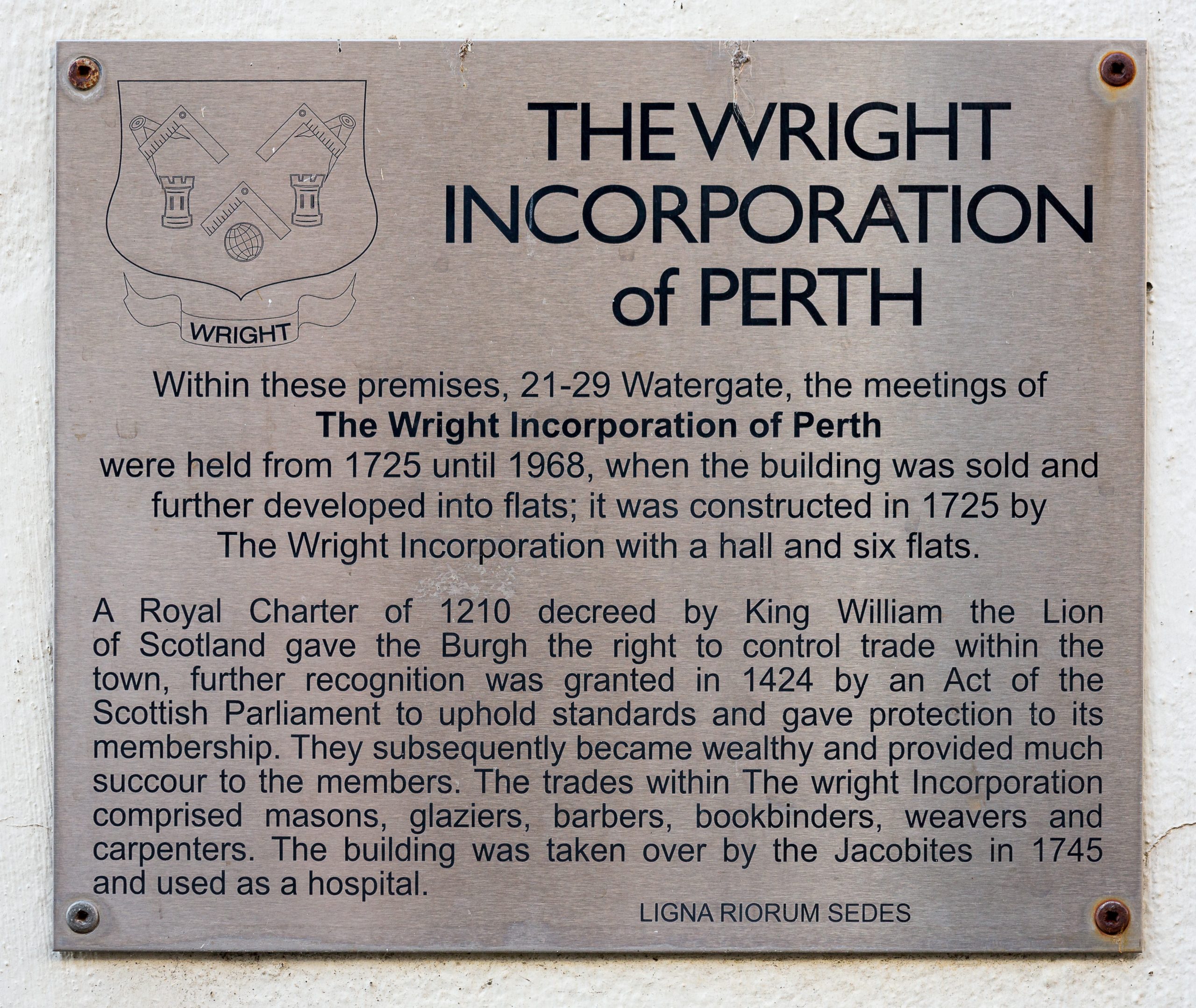
The building dated 1725 at 21-29 Watergate was occupied by the Wright Incorporation of Perth from its construction in 1725 until as recently as 1968. The Wright Incorporation of Perth was one of a number of Guilds which were given monopoly rights to trade within the city, goods relating to their particular craft. The Incorporations were empowered to decide who should be admitted to the Guild and to set rules and standards to which members were required to adhere. The Wright Incorporation looked after the interests of masons, weavers, glaziers, barbers, carpenters and bookbinders. In 1833 they lost their authority to control trade and became charitable organisations. This building may also have been used by masons. In 1745 it was briefly used as a hospital by the Jacobite army.

0 Comments
Close Menu