Perth Civic Trust erects new blue plaques at various sites in Perth where there is an unmet need. The usual requirement is that a person of significance was born, lived, died or was associated with a specific place in Perth. Usually some time (20 years is quoted) needs to elapse after the person’s death. Plaques can also describe a significant historical event or a building which has disappeared or whose function has changed. We have a number of places and people on our shortlist but we would welcome any suggestions. Do you have any suggestions? Just email us at: webmaster@perthcivictrust.org.uk
For more information about Trust plaques see our ‘Who We Are’ page.
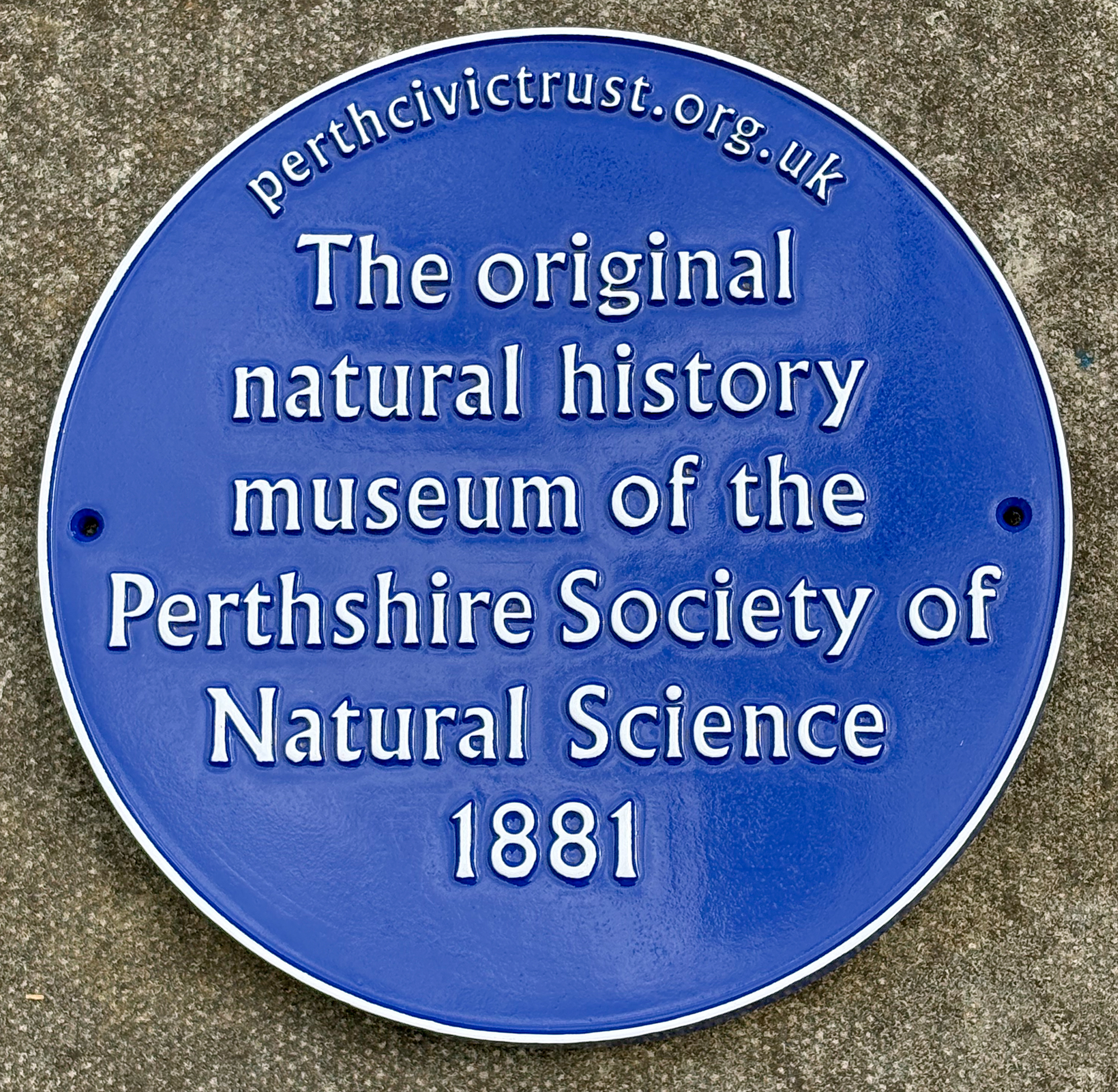
Our fifth Perth Civic Trust blue plaque was unveiled on 23rd August 2026 in Tay Street, on the facade of 66 Tay Street which housed the original Natural History Museum of Perthshire Society of Natural Science which opened in 1881. As soon as PSNS was formed in 1867, Dr Francis Buchanan White said in his inaugural address on 7th March 1867. “As regards the formation of a Museum, the Society, while not neglecting to form a good general typical collection, should more especially devote itself to the acquisition of as perfect a museum as possible of all natural products of the County”. An ambition of the Society was to establish a museum with a fine natural history collection. It was to be as comprehensive as possible in its collections of Perthshire’s rocks, minerals, plants and animals. In 1877 Sir Thomas Moncreiffe, the President, proposed the society should build the museum, including a library and lecture hall, in Tay Street. The businessman Robert Pullar of Perth’s North British Dyeworks, contributed generously to the cost of the building. After Sir Thomas’s unexpected death, the new museum, opened in 1881 was named in his honour, the Moncreiffe Memorial Natural History Museum. The museum was…
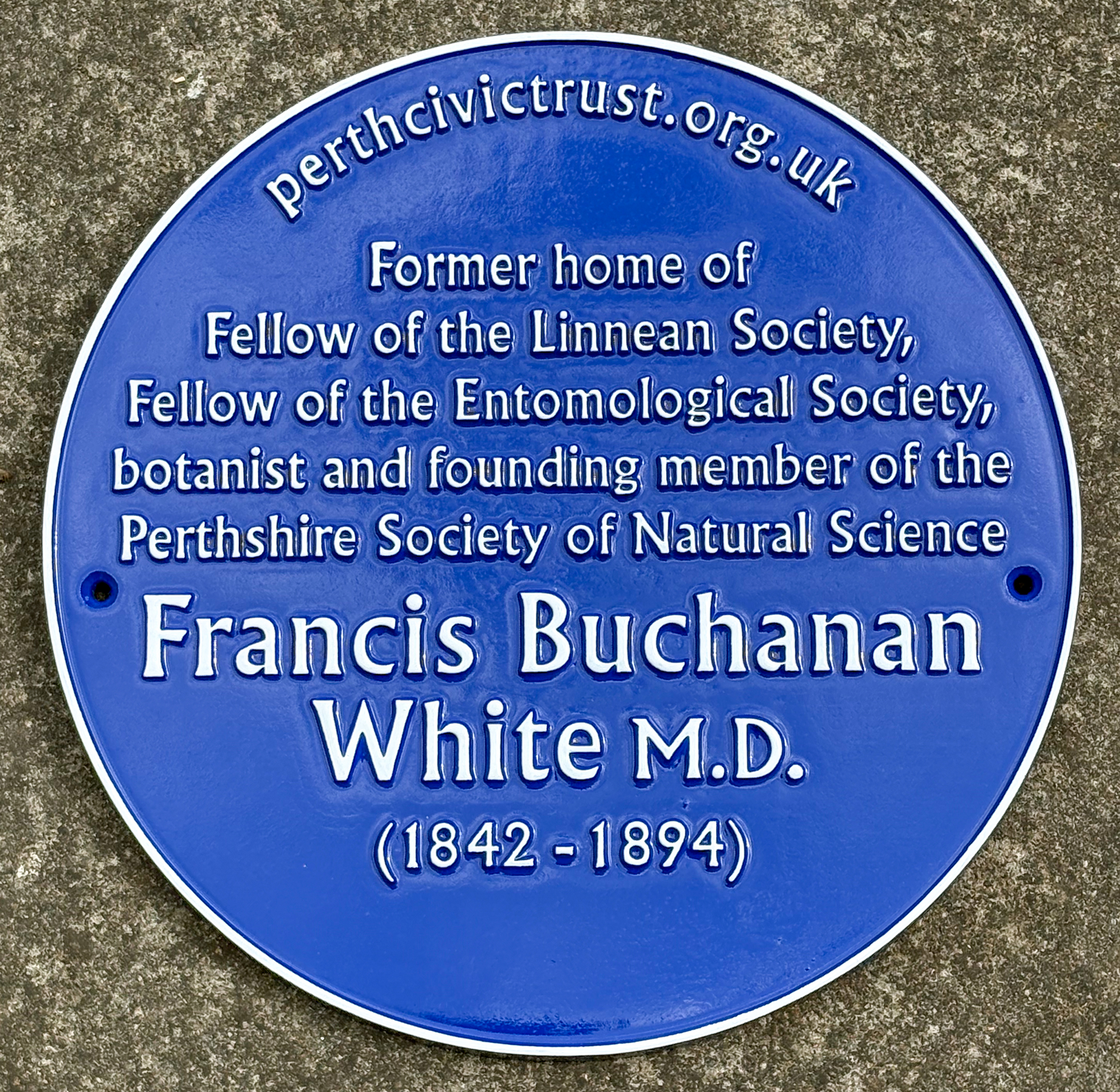
Unveiled on August 23rd at 2 Atholl Place, our fourth plaque concerns Francis Buchanan White who was a founder member and the first President of Perthshire Society of Natural Science (PSNS). He was born here in Perth and studied medicine at Edinburgh University. His passion from childhood was the study of nature. He was PSNS President for 13 years, Secretary for 2 years and editor of its publications for 13 years. White was an expert in hemiptera, the group of insects which includes shield bugs and water boatmen. He described 130 species new to science. From 1881, he devoted himself to botany and became an expert on British willows. He was a pioneer in biological recording, the careful gathering of data on where plants and animals are found in order to understand their distribution. White’s major work was the Flora of Perthshire, a detailed account of the plants which occur naturally in the county. He organised collecting trips and PSNS excursions to gather specimens and record the distribution of plants for this work. Dr White was elected in 1868, a Fellow of the Royal Entomological Society and in 1873, a Fellow of the Linnean Society.2 Atholl Place was built in 1797…
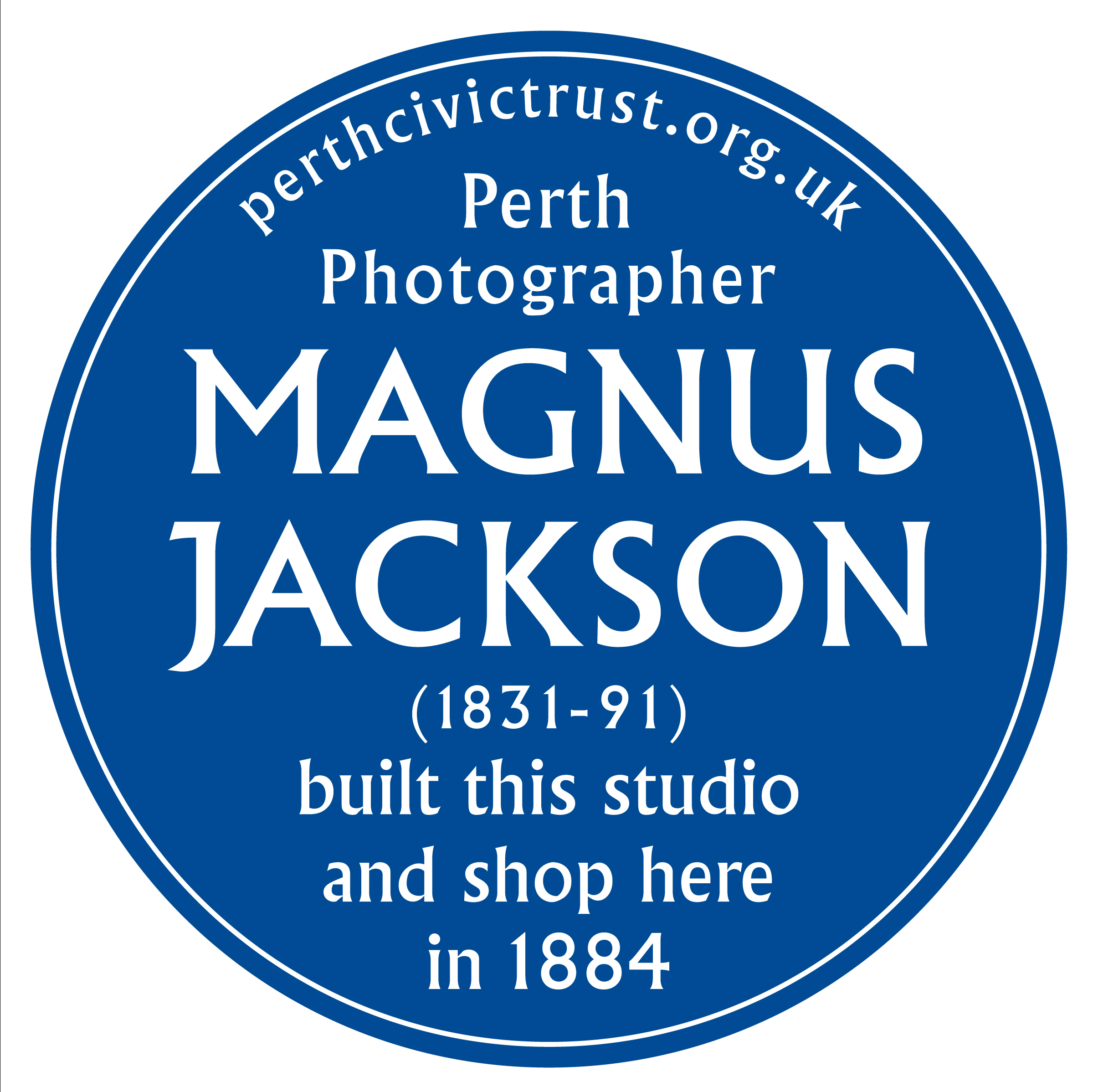
Our third Perth Civic Trust blue plaque was unveiled on 30th November 2025 in Princes Street, at the site of the studio built by early photographer Magnus Jackson. Our chairman Willie Wilson spoke of Magnus Jackson's importance in documenting Perth and its people in the 19th century. He was assisted by Bill Montgomery of the Guildry Incorporation and building owner John McEwan who showed us old photographs and documents related to historic buildings in Perth. Also in attendance were Councillors Andy Chan and Iain MacPherson, Wol Gilbraith and Jimmy Herd of Perthshire Photographic Society, Sabrina Willekens of Perth Museum and Pavo Interpretation, and Ian Cameron, Sue Hendrie, Roben Antoniewicz and Mike Bell (Perth Civic Trust).
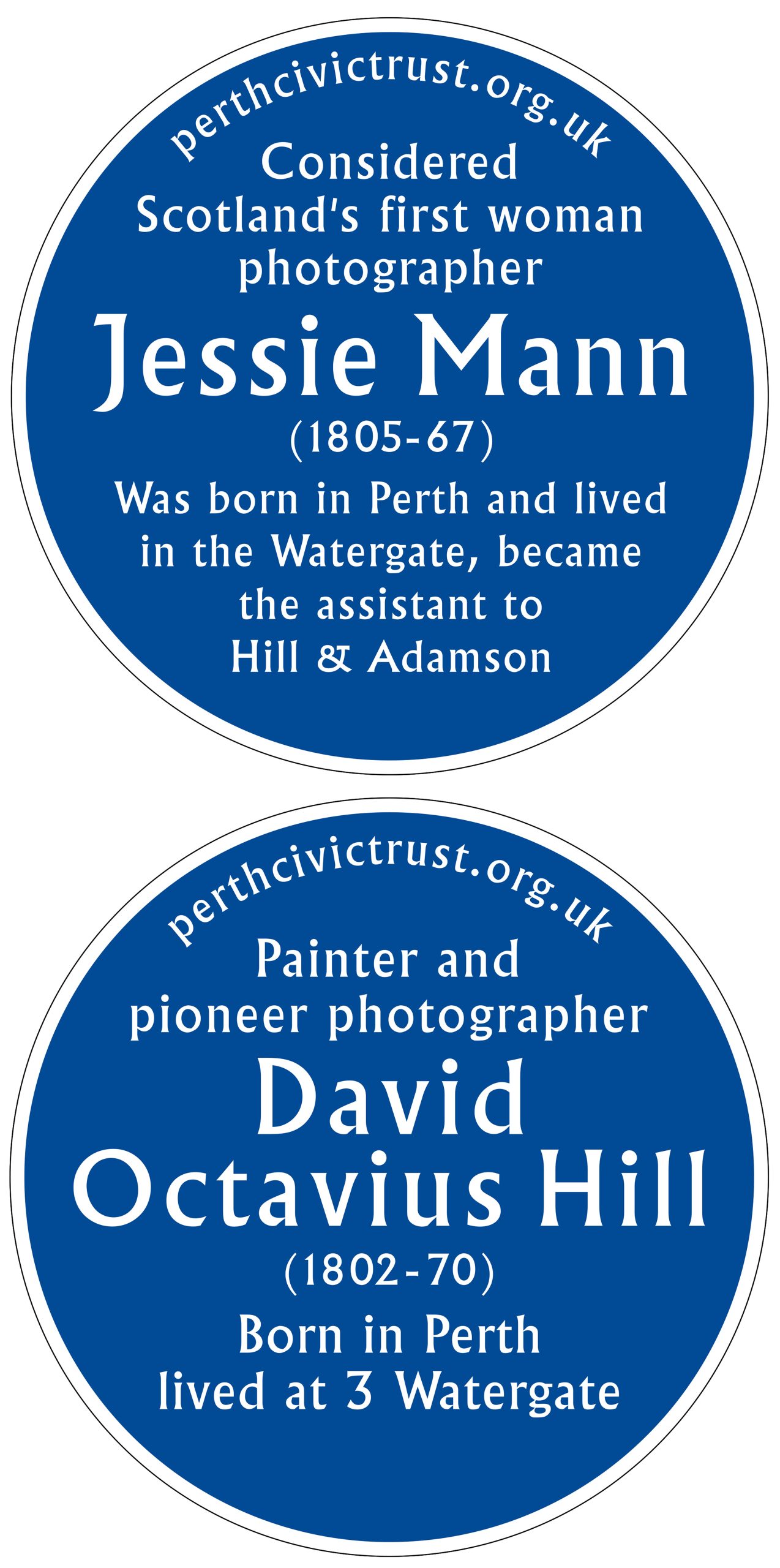
In June 2025 the first two Perth Civic Trust blue plaques were unveiled at 3 Watergate in one of Perth's most historic streets. Although it is something of a backwater now, we need to remember that, before Tay Street was constructed in 1870-1875, Watergate was the main street along the river Tay with the land sloping down from it to the river bank. The first plaque concerns the early photographer Jessie Mann, considered to be Scotland's first female photographer. It is thought that her birthplace, now demolished, may have been number 22, opposite 3 Watergate where David Octavius Hill was born three years earlier. Hill was educated at Perth Academy then studied painting in Edinburgh. Mann also moved to Edinburgh and became assistant to Hill and his partner Robert Adamson at their studio in Rock House. There is evidence that she took photographic portraits in 1843 and 1844, making her the first women in Scotland ever to become involved professionally in the new medium of photography. Hill and Adamson took many of the earliest photographs in Scotland and their work has featured in national exhibitions. Jessie Mann was included in the Tate Britain exhibition 'Painting with Light' in 2016.