Early Modern period

Bridges of Perth – Tay Street plaques

A modern notice board on Tay Street outlines the history of the Bridges of Perth. It is Panel 3 of the Perth Medieval Trail entitled Crossing the Tay and replaces an earlier board (also pictured). A little further south along Tay Street is another board (Panel 2) entitled Soggy Feet which explains changes in the ground level of Tay Street over history. 

0 Comments

Bridges of Perth – North Inch plaques

At the gateway to the Memorial Garden, on the North Inch, there are two plaques, one on each side of the entrance. The left -hand side shows present Perth Bridge, the right-hand side shows the Old Perth Bridge. By comparison the new bridge has fewer arches each of which is higher and wider than in the Old Bridge. The Old Bridge being lower and the arches narrower it is clear there was a greater possibility of debris brought down by the river in flood could form a dam, which would cause the bridge to collapse.

0 Comments

Perth Bridge

A plaque on the bridge itself at its western end states that the building of Perth Bridge was started in 1766, following a proposal tabled in 1760, by the 9th Earl of Kinnoull in his capacity as Lord Provost William Stewart. John Smeaton an accomplished architect was appointed. Smeaton had built a varied number of projects including harbours and lighthouses such as the Eddystone Lighthouse. The bridge is often called Smeaton's Bridge. The bridge opened in 1771. In 1869 pavements were added, outside the main supports of the bridge. On the north side of the westmost pillar are flood level marks dating back to 1814.

0 Comments

Fleshers Guild building in South Street

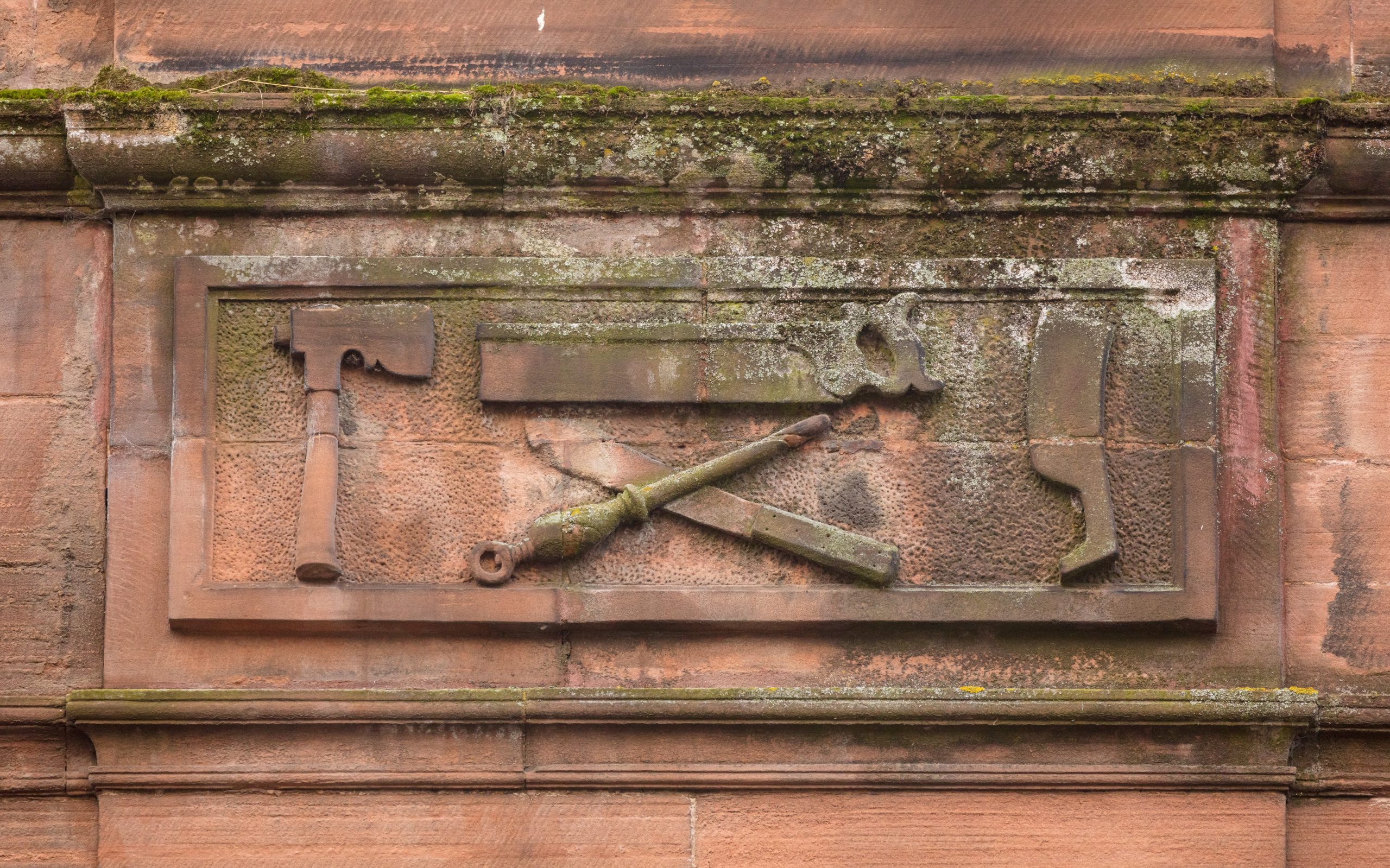
This Fleshers Guild sign is on a building in South Street (on its south side facing Fleshers’ Vennel). The Fleshers Guild erected the building in 1889 and used the hall until the 1920’s. The building replaced the Flesher’s Incorporation abattoir which previously stood on the site. This area of the South street had since Medieval times been the part of Perth used by the Fleshers both to slaughter animals and to sell meat in the market. (Perth, Street by Street, Paul Philippou). Meat and other commodities were traded on prescribed days and rules were strictly enforced. They held their market in South Street before moving to the Fleshmarket (the area in front of St. John’s Kirk). Fleshers’ Vennel leads from South Street to St. John’s Square. They owned property in this part of the town.

0 Comments

Fire Insurance Plaque on 1 Charlotte Street

This light blue building on Charlotte Street adjacent to Smeaton bridge displays a fire insurance plaque (actually a replica as the original one was stolen). Probably the smallest plaque in our records , the plaque is above the door below the central upper window. It is the mark of the Sun Fire Office with the property’s registration number, 10154, at the bottom. Fire insurance marks were used in the eighteenth and nineteenth century prior to the introduction of municipal fire services. They were fixed to the front of insured buildings as a guide to an insurance company’s fire brigade. The plaques bore the emblem of the company which insured that particular building. If an insurance company’s Fire Brigade found the plaque of a rival company on a building, they might choose not to put out the fire or else they would extinguish the blaze and charge the insuring company. The first company to use the mark was the Sun Fire Office which was established in 1710. Cast metal plaques were made of iron, lead, or sometimes brass. 

0 Comments

The Guildry Plaques on Tay Street

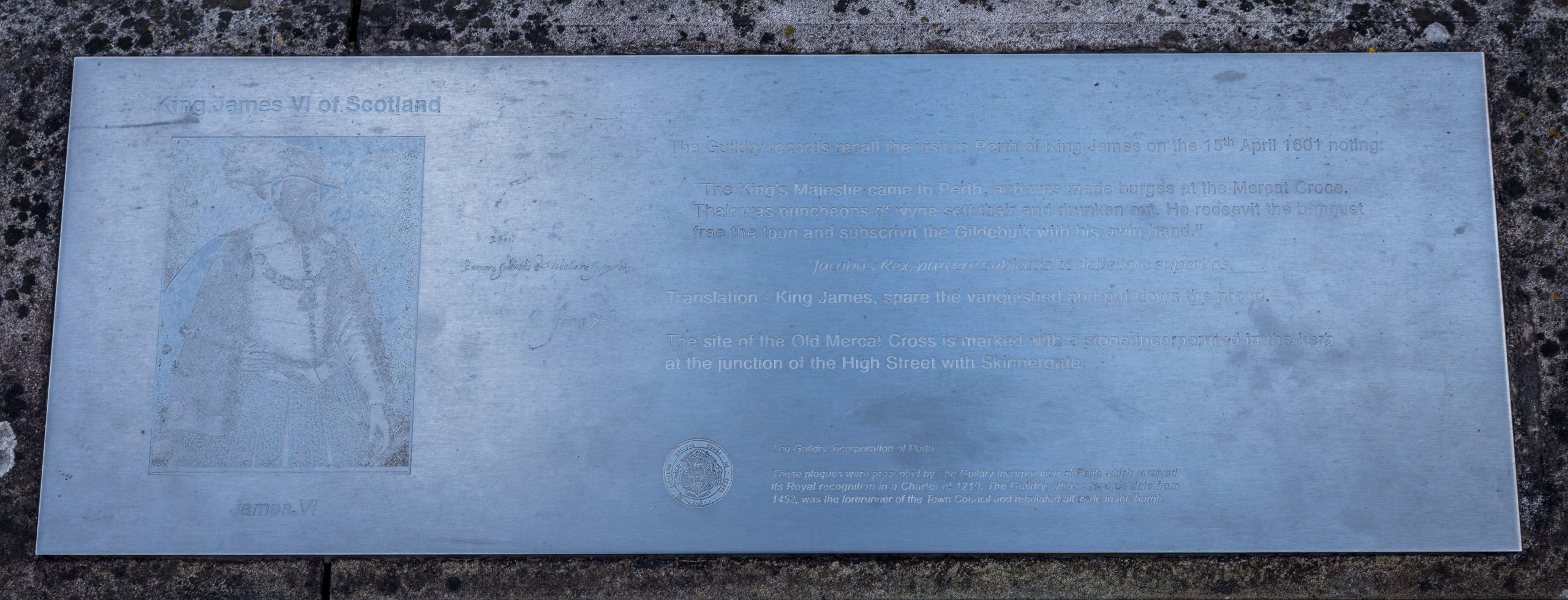
A series of six metal plaques are set on the top of the riverside flood wall on Tay Street, just north of the viewing platform. The plaques were funded by the Guildry Incorporation and describe various elements of the civic history of Perth. The first plaque records the visit of James VI in April 1601, before he became King of the United Kingdom. It records how much he was made welcome with ‘much wine’ and ‘a banquet’ but this was less than a year since an attempt had been made on his life while he resided at Gowrie House in August 1600. The second plaque deals with the previous bridges of Perth which were destroyed by the river and gives details of the current bridge. The plaque also outlines the extent of the Guildry’s responsibility for the bridges. Plaque number 3 sets out the reasons why Perth was built where it is, showing a view of Perth in 1665. Prior to the building of the Smeaton bridge, Perth was without a bridge between 1621 and 1771. Plaque 4 plaque describes the crossing the river by ferry. A gravestone in Kinnoull graveyard reflects the obvious importance of ferrymen. Although Perth currently retains…

0 Comments

Visit to Perth by Robert Burns

This plaque in High Street records the site of the Croom’s Tavern in which Burns stayed during his visit to Perth in 1787. The plaque has been moved, having previously been further down the High Street in the close leading to the Scott Street car park.

2 Comments

King James VI Hospital

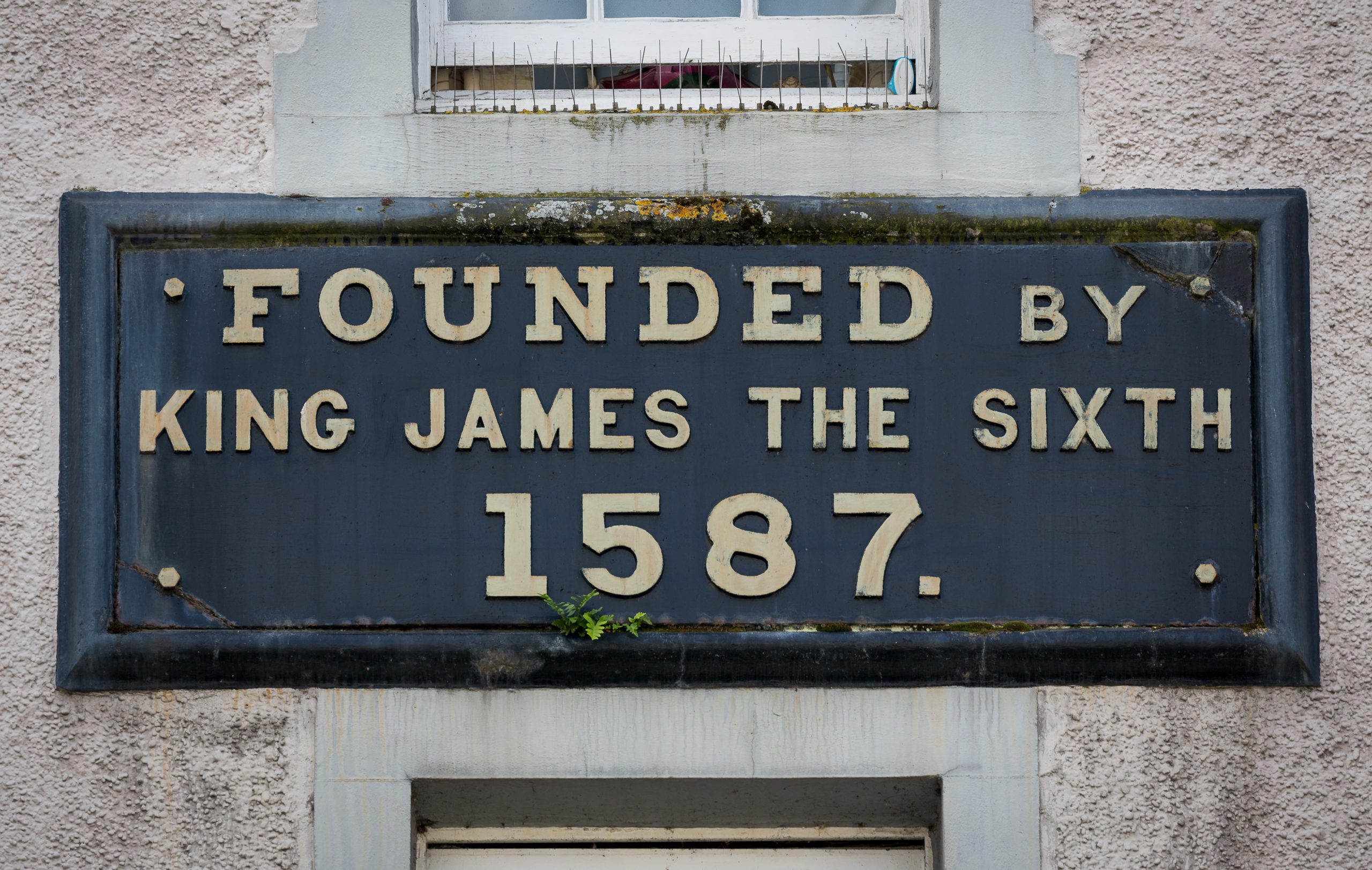
An information board (panel 10 of the PKHT Medieval Trail) explains the history of the Hospital. A Hospital at that time could be described as an early form of Poor House. It was built on the site of a Carthusian Monastery A royal charter in 1569 during the regency of the Earl of Moray established a hospital in Perth. The 1587 date on the building refers to a second royal charter by King James VI when he become old enough to rule, although buildings were not erected until 1596. The original buildings were not on the present site but close to the Perth Bridge. They were demolished by Cromwell’s engineers to provide material for the building of his citadel on the South Inch. (Gazetteer for Scotland, 2020) The building we see to-day was built on this new site in 1749-1750 and renovated in 1976 to form a series of flats. The flats are administered by the Hospital Manager overseen by the ministers and elders of St. John’s Kirk and Letham St. Mark’s church, maintaining a religious connection. There are further informative plaques within the property which is occasionally open on Doors Open Days. A full history of the site is on the…

0 Comments

David Douglas Memorial

David Douglas (1799-1834), the botanist, was born in Scone and attended Kinnoull School. Initially working as a gardener at Scone Palace, he became a plant hunter travelling extensively in Northwest America, Hawaii and Canada.  He is famous for the introduction to Great Britain of a variety of plant species particularly the Douglas fir. Lists of other species he introduced are to be found on the monument. He died on Hawaii aged 35 in 1834. He was when gored by a bull after he fell into a pit into which the bull had also stumbled.

0 Comments

Perth Waterworks

The Waterworks were designed and built (1829-1832) under the supervision of Adam Anderson, then Rector of Perth Academy (1811 to 1839). Adam Anderson also designed Perth Gas works. As an academic he was responsible for a considerable body of research dealing with atmospheric phenomena and the utilisation of gases and other fuels. Following his tenure at Perth Academy he moved to St Andrews University when appointed Professor of Natural and Experimental Philosophy. He died in St Andrews in 1846. His grave in Greyfriars Churchyard is marked by an obelisk. The building housed steam driven pumps which drew water through suction pipes from filter beds on Moncrieffe Island. The storage tank within the actual building could hold 146,00 gallons which was sufficient for Perth until the 1960s. The building was declared redundant in 1965. The rotunda opened as a tourist office, following a campaign led by Perth Civic Trust. It was later converted to the Fergusson Art Gallery in 1991. Currently it is closed as the Fergusson collection has been moved to the newly refurbished Perth Art Gallery in George Street. The gold inscription above the door reads “Aquam igne et aqua haurio” which translates as “I draw water by fire and…

2 Comments
Close Menu